I dabble into YA fiction from time to time because I like to try it for my teenage stepdaughters. I have found some real gems that I really enjoyed and with its background in the circus I was sure this would be one I would enjoy.
Corey is a teenager sigh a slightly unusual life in the circus Mystique. Estranged from her birth mother, Corey has been brought up her Aunt Shelby and trained as a trapeze artist. Now 17, Corey dreams of becoming the lead artist on trapeze and a lifelong career with the company. However, one fateful night in a town called Sherwood a terrible fire changes Corey’s future completely. Mystique are ruined and Aunt Shelby can’t give her a home anymore. The police are suspicious about the cause of the fire and so many performers are injured there is no way forward. Corey is forced to reunite with her estranged mother who happens to live in Sherwood. Now she is like every other teenager, going to school every day and living in the suburbs. How will Corey adjust to this new way of living and will she ever build a relationship with her birth mother?
Family is a major part of the novel and I enjoyed the way the author subverted the usual ideas around the best way to bring up children. Hazel, Corey’s mother, could not offer her the stable family she needed. Everything we think is wrong for children has been Corey’s norm: the travelling lifestyle, minimal schooling, living in a caravan and performing every night. The instability of the circus has been her constant so any disruption of that, even for a more ‘normal’ environment, is going to have an impact. The author illustrates this best when Corey first goes to Hazel’s house. In contrast to the colourful, cramped surroundings of the circus, Corey’s new home feels vast, cold and sterile. Her bedroom is very white with nothing out of place. Corey yearns for the cramped trailer, her glittery costumes and the sound of other voices. Hazel and Aunt Shelby may be sisters but their characters seem to match their decor; Aunt Shelby is warm and welcoming whereas Hazel feels quite austere at first.
School is another hurdle and contrasts sharply with the bits of schooling she’s had previously. Corey feels out of her depth, emotionally and intellectually. The new classmates she meets are friendly but she also faces discrimination and scrutiny. The fire is front page news and Corey is horrified to hear how some classmates talk about her circus friends, accusing them of vandalising a new housing estate and speculating on who started the fire. However, she does befriend Luke, and they form a relationship that gives Corey more stability in this new world. While she is struggling to bring her school work up to standard and improve her relationship with her Mum, Luke feels like a constant. The book does focus in on their romance and how it impacts on their respective families. While reading I wondered whether Corey would become so involved with Luke and Sherwood that the circus and her talent as a performer we would be lost.
I was glad to see that the author chose not to go for the saccharin happy ending, not everything is tied up neatly. I think it’s important for YA fiction that endings are more realistic and not hearts and flowers. I imagine the original format of the novel made it difficult to come to a conclusion - the book was serialised on WattPad before publication and readers would have been heavily invested in certain characters and subplots so pleasing everyone would be difficult. I think Corey is such a sympathetic character that it’s hard not to root for her and I was wishing for an ending where she can get back to her true love, the circus. The lesson that not everyone is cut out for a conventional lifestyle was something teenagers need to hear. It’s ok to follow a different path and do what you love.
I received a proof copy of the novel via NetGalley in exchange for an honest review.
Wednesday, 18 September 2019
Tuesday, 17 September 2019
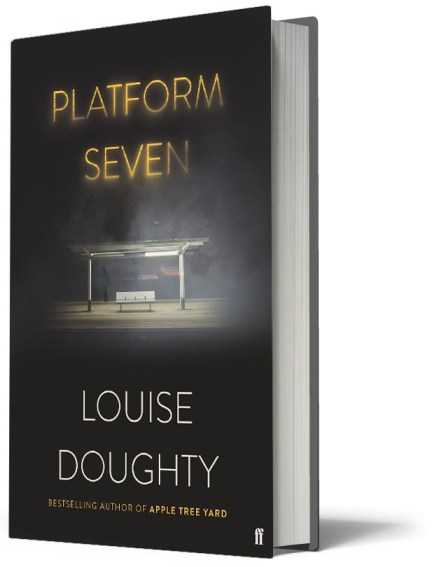
Platform Seven by Louise Doughty
Platform Seven
Having spent a bit of time hanging round Peterborough train station over the years, I thought it seemed an unpromising place to set a novel, but Louise Doughty has proved me wrong. In Platform Seven, she weaves an unmissable whodunnit where Lisa tries to understand why she died.
The book opens following security guard Dalmar, a refugee from Somalia, as he carries out his night shift. After midnight the station goes quiet and most people might assume it is closed, but it runs with a skeleton staff and between the hours of 3am and 6am only freight trains rumble through at platform seven. This is the last platform, towards the back of the station and only partially viewable by CCTV. It is the perfect place for homeless people to hide out and try to sneak into the warmth of the waiting room for a few hours. Dalmar has been desperate, so sometimes he doesn’t have the heart to move them on, feigning ignorance so they can grab s few moments of warmth. At first, he mistakes the man walking through the station, for a homeless person and pays no attention. The man, wearing a cap and donkey jacket makes for platform seven and waits. To Dalmar he seemed hunched in the cold and seems to almost be in a trance.
There is only one other witness to his arrival and that is Lisa. Lisa is trapped in the station, she knows all the staff by name but can’t get them to see and here her. On this occasion she is sure she understands the desperation in this mans eyes and she worries he isn’t here for the warmth. As a freight train trundles towards the station he steps towards the platform edge and Lisa desperately tries to stop him but he can’t hear her. Dalmar finally sees the man but is too far away to make a difference. He shouts, But the man keeps going. He steps through Lisa and straight under the train.
Doughty explores the effect this man’s suicide has, firstly on the railway staff. PC Ashcroft from the British Transport Police, and his boss face the task together. Ashcroft has never experienced a death here before and the horrifying detail of gathering body parts, sorting through clothing to look for ID and organising a cleaning team affects him and us at the same time. He doesn’t want to break down but struggles and wants to understand what could make a man die like this? Dalmar, who witnesses the incident with Lisa, suffers a flashback triggered by the event. We are transported back to a dinghy on a river and a woman’s head seemingly floating and screaming at the same time. Lisa wanted to stop him, is horrified by what she’s seen and the realisation that this is how died too. In the days that follow Lisa becomes fascinated with a distraught young man she sees in the cafe while Ashcroft discovers that a young woman died recently on the same platform. Something about Lisa’s death piques his interest and makes him wonder whether the events leading up to her apparent suicide are properly investigated. He asks if he can do some digging and gets the go ahead. Lisa also has a breakthrough, she finds that she can follow the young man out of the station and accompanies him on his walk home. This begins her wanderings and the unlocking of her story.
Doughty’s description of the romance between Lisa and her doctor boyfriend, Matty, is brilliantly written and shows a real understanding of domestic abuse. Psychological or emotional abuse has only been made a criminal offence more recently, but it is subtle and difficult to pinpoint even for the victim. I was in an emotionally abusive relationship for five years and despite having therapy there are still times when I am confused about how and why I let this happen. Of course I’m not responsible for the abuse, but I was responsible for allowing it to continue. We see how slow and subtle the behaviour begins; a throwaway comment that could be a criticism, a moment of jealousy, an insistence that a hurtful comment was simply a joke and you’re too sensitive. I highlighted a whole passage to use with writing therapy clients:
The sad, sobering and undramatic truth is, I made the same mistake that women and girls throughout the ages and across continents have so often made, the one that is so easy and seductive, so flattering to ourselves. I mistook possessiveness for love. By the time I realised the magnitude of that mistake, I had too much invested in it to unpack it, and so I had to keep on making it in order to justify the fact that I had made it in the first place. It was too large and complex an error to admit–and how could I explain I had made a mistake to family and friends when I didn’t even understand how I had made it myself?
This is a beautiful piece of writing that answers perfectly the question everyone asks; ‘why didn’t you leave?’ When asked by my family why I’d never told them, the answer was the same. My husband had died, I had been broken and this person professed to love me. I was ready for something positive to happen in my life. I glossed over a couple of red flags because he was stressed at work, or moving house and as well as an excuse there were promises to change. If I admitted that my relationship was a sham I would have to admit there was no happy ending and I would be back where I started: bereaved, broken and alone.
It took me five years to admit to others and myself that I had to leave. I’d had to gather my strength over time and eventually he behaved so badly I couldn’t gloss over it any more. I was aware reading Lisa’s story that things could have been so much worse. Matty breaks her confidence and gaslights her until she doesn’t even trust her own judgement anymore. The outcome is devastating.
I really enjoyed the way Doughty slowly frees Lisa. Firstly, she is liberated from the station, then finds a way to whisper a suggestion, she travels all over Peterborough and even beyond the city towards the end. She finds others like her: the old man from the station suicide pops up soon after his death; a woman in an orange suit striding towards the station; the weird grey blob at the top of the multi-storey car park who she knows to stay away from. However, there are places she wants to be. Most importantly, a visit to the woman she once saw through a window who seemed to need help.
Doughty’s book is a great thriller and all those cliches we all know so well like ‘a real page turner’ and ‘I couldn’t put it down’ were all true. But the book was more than that. Lisa’s story absolved me in a way. It made me understand my own experience like nothing else has. It taught me to talk, just as Lisa wishes she’d acknowledged the woman at the window or talked to someone about what was happening. I found PC Ashcroft’s conversation with the downstairs neighbour so moving. Her language barrier and Lisa’s reticence to let anyone in meant that her warning ‘you don’t have to put up’ was barely noticed. Yet her warning came from her own experience of fear, control and violence. We need to talk more. To not be ashamed of our experience. After all, I didn’t ask to be a victim of psychological abuse and nor did the women in the book. We can use our experience to educate, warn and let others know that this is not their fault. Lisa has to find peace in a different way, but this book serves as a warning, so women suffering abuse know they can access help and there is a better, more peaceful life out there.
Friday, 13 September 2019
Wonderland: An Anthology
When I noticed this new set of short stories inspired by Alice in Wonderland I immediately begged a copy to read. I’m such an Alice fan that recently, when someone came into my home for the first time, they asked if it was my favourite book. I’m not sure I’d fully realised that I’d acquired a tea set, a dodo, a Mad March Hare, and a 5ft white rabbit with working pocket watch that stands in the hall! I have a lot of the literature inspired by Alice and fell in love all over again watching the recent Royal Ballet production of the story. Being a therapist means I have a fascination with the psychological aspects of the story. The ‘eat me/ drink me’ section can be read as an interpretation of puberty and the need to be noticed on one hand, but the urge to disappear on the other. The Red Queen as a metaphor for the stifling confines of Victorian middle-class womanhood, and her cries to chop off heads can be seen as a curtailing of Alice’s adventure and freedom. The White Rabbit is a picture of anxiety and The Mad Hatter and friends may be mad, or may be portraying madness to be free and avoid the court and all its rules. It is always the characters that draw me in most, just as they did when I was a child. I’m a sucker for anthropomorphic characters -as my collection of textile sculptures shows - so my imagination ran riot when I first read the novel, full of waistcoated rabbits, monocled dodoes and hares in top hats. I actually own a hare in a top hat. I’m a hopeless case! Lewis Carrol wrote a book so beloved that it has inspired writers, artists, photographers and filmmakers and the recent explosion of Alice merchandise means we see it everywhere we go. I was interested to see what writers such as M.R. Carey and Catriona Ward had done with the story.
Some stories pick up the psychological elements I find intriguing such as Alison Littlewood’s ‘Eat Me, Drink Me’ where a woman who is getting married has doubts and imagines how much easier it would be to become her pet rabbit. This reminded me of Tim Burton’s film version which opens at a garden party where Alice’s engagement is to be announced. Tiring of being primped and made ‘acceptable’ to the restrictive society gathered in the garden, Alice follows the white rabbit into a maze where she escapes into Wonderland. This underlying theme of the what is acceptable female behaviour is echoed elsewhere in the anthology; in Juliet Marillier’s story ‘Good Dog, Alice’ Dorothea’s grandad warns her against calling the dog Alice because creatures with that name can be prone to ‘wild escapades’ and in George Mann’s ‘About Time’ a girl called Lucy has visited Wonderland as a child, but now she’s a grown woman shouldn’t such childish pursuits be set aside?
The underlying creepiness and horror of Wonderland inspires other stories within the collection. I remember being horrified by the scene with the Duchess, the pig and the meat cleaver when I was young and I find Tweedledum and Tweedledee slightly disturbing, because although comic, they remind me of the ghostly twin girls in Stephen King’s The Shining. L.L. McKinney’s story is set in a world already created by her novel ‘A Blade So Black’ and brings an Alice twist to the crimes of Jack the Ripper in a story entitled ‘What Makes A Monster.’ ‘There Were No Birds To Fly’ is M.R. Carey’s take on some of Wonderland’s residents by placing them in the horror genre whereas Cavan Scott represents some of the gorier elements of the tale with some residents slowly disappearing. Carroll’s book pairs well with the fantasy/supernatural genre and I feel these stories are quite successful. The whole anthology is bookended with two Alice poems by Jane Yolan.
There is something for everyone here and while not every story grabbed my imagination, there were certainly enough to keep me interested. Every anthology I’ve read feels uneven because I don’t connect with every genre and writer, and I’m sure the favourite stories here would be different reader by reader. What the anthology tells me as a whole, is that Lewis Carroll’s story is a living entity, ripe for adaptation and inspiring to every new generation and reader. The story is so rich that it really does lend itself to most genres, with this anthology alone ranging across sci-fi, horror, fantasy, cyber-punk and crime fiction. It can also be transported to any location - here it is relocated to the present day, takes in the folklore of Japan and the Wild West. For me, it’s still the psychological aspects that resonate, where Wonderland is a metaphor for freedom, escape, madness and the difficulties of growing up or saying goodbye. Rio Youer’s story ‘Vanished Summer Glory’ explores bereavement and what grief does to the imagination. I’m sure I will dip in and out of this book from time to time, but for now I’m going to make a cup of tea in my ‘Drink Me’ mug, plump up my flamingo cushions and put up my white rabbit slippers. Maybe I’ll have a snooze, or an adventure....
Thursday, 12 September 2019
The Ten Thousand Doors of January by Alix E.Harrow
January is a young girl with a great imagination. She lives with her guardian Mr Locke and her nurse/governess Mrs Wilde, while her father travels the world. Her father is an adventurer, travelling far and wide to find treasures for Mr. Locke’s collection. She misses him and sits in her room wrapped in the pink and gold bedspread he sent her from India. January is just becoming a teenager and starts to learn that her freedom and imagination are a threat. One day she writes about a door to another world and soon after she discovers the very door she has written. Stepping through, she sees a different land with a white shimmering city in the distance. She now sees she can have her own adventures without ever leaving the hall and the protection of Mr Locke. But her creativity is not seemly for young ladies and Mr Locke determines she is overstimulated and needs the rest cure. This involves lying in a plain room with nothing to occupy her mind. At first she runs wild and tears the curtains and bedspread in defiance, but then realises this simply plays into Mr Locke’s hands. Instead she chooses to comply on the surface and become the nice young lady he wants. Yet, all the time a sense of adventures grows within and we realise January is not going to be a nice young lady for long.
Harwood intersperses January’s story with a different narrative from a book that comes from her father. The story tells of a young girl named Adelaide or Ade to her family and the age old tale of a haunted house that all the local children stay away from because of the ‘boo hags’. Ade is more curious than she is scared, but in the cornfield outside meets a type of boy she has never seen before, called Yule Ian.
We don’t know where these people fit into January’s story but their story hints at worlds as yet unseen and legends from every country in the world. It’s as if January’s restrictions of Victorian womanhood is the smallest Russian doll in a set, she is enclosed by bigger worlds than her own. Her existence is restricted by our modern standards, but what if our own existence is similarly restricted? I started to think of other worlds beyond this one where the rules of existence are totally different or without limit.
I truly loved this wonderful book. It took a few chapters for everything to click into place, but I was intrigued enough to keep going till the story made sense. January is a great central character and her need to break free from the constraints placed upon her by Mr Locke would be understood by every teenage girl. I think this is partly the novels success - Harrow has taken a familiar feeling from any teenage girl, but placed it within a magical world where there are no limits to existence. When January realises she can write doors into other worlds and follow them, more freedom than she ever imagined is hers for the taking. However, this freedom depends entirely on pleasing Mr. Locke and we learn later in the book that his guardianship of January is even more far reaching than even she thought. He has schooled and packaged January in a way that is acceptable to Victorian society. He has polished and locked her away like one of the many treasures in his collection.
The novel is full of characters who move beyond their bounds in one world, while finding themselves completely at home in another. Jane is sent as a companion for January, paid for by her traveller father who comes and goes plundering worlds for Mr Locke’s collections. Jane finds that in one world her fearlessness and hunting skills are integral to her culture and survival, but in January’s world she is expected to keep her eyes down and not challenge people who are her betters. In this world Jane is problematic because she is a woman with no breeding or class and because she is black. January’s friend Samuel has slightly more freedom than Jane because he is a man even though his class and skin colour are the same. Just as Locke categorises and catalogues his collections, it seems there is an unspoken taxonomy of people. January has side-stepped disapproval, despite being poor and mixed race, thanks to Locke’s fortune which keeps her in dresses, pearls and first- class travel. January is kept in a gilded cage, but it is still a cage.
I couldn’t see at first where Ade and Yule Ian fit into the narrative, but soon I realised how crucial they both are to January and the world she sees as she discovers her writing power. It takes huge courage to use that power, but increasingly January finds it is the only way she can protect herself and the freedoms she believes in. She wants to find her father or at least the last place connected to him and she will keep wrenching doors open until she finds the right one. A shadowy organisation is not far behind her though, run by The Founder. They want this world to stay on one course; a rigid world following a set pattern of Empire, industrial revolution and exploitation of other country’s resources. The magical worlds January visits are too unpredictable, because they signify endless change. What will The Founder do to keep the doors closed and how can January throw them wide open again in order to see her family?
For me this novel is so successful because even when we are in the most alien of worlds the author never forgets this is a human story. The family bonds and the aching loss of bereavement feel real and honest. These may be extraordinary characters but their emotions are very human and relatable. I found myself aching for January to be reconciled with her father and for his heartbreak to heal. The novel also has something important to say about love: it’s many forms from familial to friendship and romantic love; the compromises of successful relationships and the need to give the one we love freedom and space to grow.
I was so sad to finish this story and almost resented the next book I picked up. It is inventive, extraordinary and touching in equal measure. It is my book of the year so far and I’m now ordering my hardback copy to keep.
I received a proof copy of the novel via NetGalley in exchange for an honest review.
Tuesday, 10 September 2019
The Mindful Writing Workshop By Richard Koch
I jumped at the chance to review this title because I use resources like this every day in my job as a therapist. I love finding new books and theories to use with clients.I was interested to read this book because I run writing workshops as part of my therapy business, including mindful poetry writing. My workshops are for adults, whereas this book focuses more on children’s workshops. Although, the principles behind practicing are largely the same especially where working with vulnerable people or those exposed to trauma. I could see Koch’s book being a great underpinning for my work with adult survivors of sexual abuse or domestic violence.
The book gave me the theory behind how I teach, for example the principle of the ‘Packed Lesson’. I thought of this in relation to how I teach mindful haiku writing. We begin by clarifying why each step is useful - eg: we need to do a mindfulness exercise first to tune into our environment and this generates the poetry content. We would show an example of each step - I do this by writing alongside the class. Then explain how each step helps the writing - e.g: mindfulness works with haiku because when we are mindful we are present in the moment and each haiku is supposed to be the distillation of a moment in nature. A work period then takes place - eg: the student works through their senses and notes what they experience, then uses the haiku form to turn these sensory notes into poetry. The task ends when students share their writing and the experience of writing them with each other.
The author goes on to explain that working with trauma means adding ways of countering stress and anxiety into the teaching practice. I found these tips particularly helpful, especially how to establish mindfulness and respect into the classroom by creating a respect agreement. It even covered how to manage student feedback by reminding students that mistakes are how we learn, creating a foundation of safety and praising effort above correct answers.
I was impressed with this book and felt I would buy it to complement my workshop development. It is great for therapists, trauma workshop facilitators and teachers of any age. There are principles described here that would enhance any teachers practice, whatever the age of student. Some ideas are specific for those children experiencing trauma, but also remind us how to teach every child and keep learning fun. The Positive Response Protocol would help any teach who needs to offer gentle encouragement rather than judgement or criticism.
In the second section the author offers ideas to prompt creative writing, such as Life Maps. He suggests thinking of a hobby from your childhood, a place you used to visit and other prompts that can start memoir writing or be a basis for creating a character. I loved this because when I’m teaching journal writing I keep a jar of prompts for those who find it difficult when facing a blank page.
I would buy this book on the basis that many of my adult students are still wrestling with and writing about trauma. When writing about the most difficult experiences in their lives the writer can be triggered and all the feelings of that trauma flood in and can be overwhelming. This book gave me the basic tools to keep someone safe and help them process their experience. As a facilitator I have to hold them, but also return them to the here and now. They have to leave the session safe and able to carry on with their day and this book would help me to do that.
The book gave me the theory behind how I teach, for example the principle of the ‘Packed Lesson’. I thought of this in relation to how I teach mindful haiku writing. We begin by clarifying why each step is useful - eg: we need to do a mindfulness exercise first to tune into our environment and this generates the poetry content. We would show an example of each step - I do this by writing alongside the class. Then explain how each step helps the writing - e.g: mindfulness works with haiku because when we are mindful we are present in the moment and each haiku is supposed to be the distillation of a moment in nature. A work period then takes place - eg: the student works through their senses and notes what they experience, then uses the haiku form to turn these sensory notes into poetry. The task ends when students share their writing and the experience of writing them with each other.
The author goes on to explain that working with trauma means adding ways of countering stress and anxiety into the teaching practice. I found these tips particularly helpful, especially how to establish mindfulness and respect into the classroom by creating a respect agreement. It even covered how to manage student feedback by reminding students that mistakes are how we learn, creating a foundation of safety and praising effort above correct answers.
I was impressed with this book and felt I would buy it to complement my workshop development. It is great for therapists, trauma workshop facilitators and teachers of any age. There are principles described here that would enhance any teachers practice, whatever the age of student. Some ideas are specific for those children experiencing trauma, but also remind us how to teach every child and keep learning fun. The Positive Response Protocol would help any teach who needs to offer gentle encouragement rather than judgement or criticism.
In the second section the author offers ideas to prompt creative writing, such as Life Maps. He suggests thinking of a hobby from your childhood, a place you used to visit and other prompts that can start memoir writing or be a basis for creating a character. I loved this because when I’m teaching journal writing I keep a jar of prompts for those who find it difficult when facing a blank page.
I would buy this book on the basis that many of my adult students are still wrestling with and writing about trauma. When writing about the most difficult experiences in their lives the writer can be triggered and all the feelings of that trauma flood in and can be overwhelming. This book gave me the basic tools to keep someone safe and help them process their experience. As a facilitator I have to hold them, but also return them to the here and now. They have to leave the session safe and able to carry on with their day and this book would help me to do that.
Wednesday, 4 September 2019
The Man Who Didn’t Call by Rosie Walsh
I read this in two long bursts - one of which started at 3am. It’s a book I couldn’t put down because all i wanted was these two people back together. The harsh realities of grief and lifelong family rifts are well drawn and believable. All of these people are trying to move forward despite their lives missing a beat one day on a country road, where a split second decision has lifelong consequences. This book explores grief, loss, loyalty, loneliness and the eventual incredible ability the human heart has to heal.
Sarah has a 7 day whirlwind romance with Eddie. They meet by chance on a country road while Sarah is visiting her parents. She thinks Eddie just might be the one. But, Eddie goes away on holiday and she never hears from him again. Is Eddie a heartless playboy who never intended to call? Did Sarah do something wrong? Or has something terrible happened to him? Instead of listening to friends and writing this off as a one night stand, Sarah begins to obsess and is determined to find the answer. Every clue she has comes to a dead end and she is in danger of completely losing her dignity. As her time back home in the UK starts to run out, Sarah looks for clues to track Eddie down. What she hears is confusing her further. His friend doesn’t give the simple answer, that Eddie has moved on, but gives her a warning; if she knows what’s best for her, she needs to stop looking for Eddie.
Walsh has successfully intertwined a love story with a mystery. I veered between wondering if Sarah was becoming irrational and willing her to succeed. Interspersed with the narrative are beautiful letters of love and loss addressed to the writer’s sister, affectionately nicknamed ‘Hedgehog’. The letter writer’s sister died when they were young, but we don’t know what happened or who the letter writer is. If Sarah is the author of the letters does this loss have something to do with the warning she’s been given? Is her sister the key - not just to Eddie’s disappearance, but to why Eddie was on that particular stretch of road on that day?
I quickly became invested in Sarah and Eddie’s story. I think we’ve all been subjected to the watched phone that never rings and how crazy it can make us. It could have made me dislike Eddie early on, but for some reason I never did. I’m definitely a hopeless romantic so I seemed to accept Sarah’s hope that this could still work out. The other characters in the novel are also well-written and compelling. I’m a therapist so I was particularly interested in Eddie’s mother and her mental ill health. I think her symptoms and the way she manipulated Eddie showed a streak of narcissism. She finds it impossible to see this situation from his point of view, only how it might her. Anything that threatens their dynamic as carer and patient is a huge threat to her and she responds with emotional blackmail and hostility. Eddie is as much a prisoner of her mental ill health as she is. I also had empathy for Sarah’s friend Jenny who is struggling to conceive and undergoes IVF treatment to the point of financial ruin. Her character probably leapt out at me because I’m also not able to have children, and know how difficult it can be to come to terms with. Her stoicism and determination to support her friend in the face of her own loss is very moving.
I stayed up until 2am to finish the book, because I had everything crossed that the mystery would be explained and these two people could move forward together. To different degrees, all the novels characters are imprisoned by the past and losses they can’t accept. My husband died when he was 42 and I was 35. It’s like a chasm opened up and I had to choose between staying on one side forever, with the past and my feelings of loss and fear. Or I could choose to jump over that chasm into a new future. I never forget what happened or the love I have for Jerzy, but twelve years later I have a wonderful partner and two beautiful stepdaughters. Thankfully, I had the bravery to move forward knowing I can’t lose my memories of the past but I still have a future full of possibilities I never imagined. That’s what the characters in the novel are trying to do. Grief is different for everyone and there are always tensions between those who are trying to heal and those who can’t imagine healing because it feels like a betrayal. Rosie Walsh draws these different threads together beautifully, creating a bittersweet novel that captures the incredible ability the human heart has to heal.
Sarah has a 7 day whirlwind romance with Eddie. They meet by chance on a country road while Sarah is visiting her parents. She thinks Eddie just might be the one. But, Eddie goes away on holiday and she never hears from him again. Is Eddie a heartless playboy who never intended to call? Did Sarah do something wrong? Or has something terrible happened to him? Instead of listening to friends and writing this off as a one night stand, Sarah begins to obsess and is determined to find the answer. Every clue she has comes to a dead end and she is in danger of completely losing her dignity. As her time back home in the UK starts to run out, Sarah looks for clues to track Eddie down. What she hears is confusing her further. His friend doesn’t give the simple answer, that Eddie has moved on, but gives her a warning; if she knows what’s best for her, she needs to stop looking for Eddie.
Walsh has successfully intertwined a love story with a mystery. I veered between wondering if Sarah was becoming irrational and willing her to succeed. Interspersed with the narrative are beautiful letters of love and loss addressed to the writer’s sister, affectionately nicknamed ‘Hedgehog’. The letter writer’s sister died when they were young, but we don’t know what happened or who the letter writer is. If Sarah is the author of the letters does this loss have something to do with the warning she’s been given? Is her sister the key - not just to Eddie’s disappearance, but to why Eddie was on that particular stretch of road on that day?
I quickly became invested in Sarah and Eddie’s story. I think we’ve all been subjected to the watched phone that never rings and how crazy it can make us. It could have made me dislike Eddie early on, but for some reason I never did. I’m definitely a hopeless romantic so I seemed to accept Sarah’s hope that this could still work out. The other characters in the novel are also well-written and compelling. I’m a therapist so I was particularly interested in Eddie’s mother and her mental ill health. I think her symptoms and the way she manipulated Eddie showed a streak of narcissism. She finds it impossible to see this situation from his point of view, only how it might her. Anything that threatens their dynamic as carer and patient is a huge threat to her and she responds with emotional blackmail and hostility. Eddie is as much a prisoner of her mental ill health as she is. I also had empathy for Sarah’s friend Jenny who is struggling to conceive and undergoes IVF treatment to the point of financial ruin. Her character probably leapt out at me because I’m also not able to have children, and know how difficult it can be to come to terms with. Her stoicism and determination to support her friend in the face of her own loss is very moving.
I stayed up until 2am to finish the book, because I had everything crossed that the mystery would be explained and these two people could move forward together. To different degrees, all the novels characters are imprisoned by the past and losses they can’t accept. My husband died when he was 42 and I was 35. It’s like a chasm opened up and I had to choose between staying on one side forever, with the past and my feelings of loss and fear. Or I could choose to jump over that chasm into a new future. I never forget what happened or the love I have for Jerzy, but twelve years later I have a wonderful partner and two beautiful stepdaughters. Thankfully, I had the bravery to move forward knowing I can’t lose my memories of the past but I still have a future full of possibilities I never imagined. That’s what the characters in the novel are trying to do. Grief is different for everyone and there are always tensions between those who are trying to heal and those who can’t imagine healing because it feels like a betrayal. Rosie Walsh draws these different threads together beautifully, creating a bittersweet novel that captures the incredible ability the human heart has to heal.
Wednesday, 28 August 2019
Home Truths by Susan Lewis
‘How far would you go to keep your family safe’?
I have read some of Susan Lewis’s earlier novels and this one felt different to me. The writing always takes hold and pulls you into the characters world, but this novel addresses so many contemporary social and political issues. It felt more like a world I could identify with; I have worked for over twenty years in mental health and I come up against these issues all the time. My client group is largely people with physical disabilities so the effects of the bedroom tax, PIP reforms, and now universal credit, have been a huge cause of depression and anxiety. It was great to see a contemporary novel tackle issues I feel so strongly about.
The novel opens with the shocking scene where Stephen is the victim of a vicious assault at the hands of a gang, including his own son. Liam left home after his drug addiction and friendships within a gang started to affect family life. It is an incident between Liam and his youngest son that leads to Steve being attacked and we meet Steve’s family in the aftermath of his death. Angie is missing Steve but trying to keep strong and hold her family together, despite everything going wrong financially. As well as the younger son the couple have a teenage daughter, Grace. The family have lived a life very dependent on Steve and the goodwill of his business mentor. Steve contracted as a painter and decorator, but worked mostly with one property developer. Through him the family rent a home on the best estate in town, at a low cost and with all the features Angie has wanted. But Steve does not have life insurance and without his income Angie can’t keep on top of the bills. The rent is increased and despite having Universal Credit Angie can’t stop the debt piling up. She has a part time job running a local charity that works with homeless people, but it doesn’t pay well. It also makes it more difficult for her to ask for help, because she is meant to be the one with the answers. As life becomes more desperate Angie tries to hide her situation from everyone. They lose the dream home, sell their possessions and end up with the children at her sister’s and Angie sleeping in her car. How will the family come back from this and will Angie’s relationship with her eldest child Liam ever recover?
Despite the familiarity with the subject matter I found Angie’s character difficult to connect with. I seemed to identify more with Grace, her daughter. As a therapist, I do a lot of self- reflection and I wondered if I identified with her because my parents struggled financially when I was a teenager. I know how hard it is to be different from your peers and unable to enjoy the same clothes and activities. Their bereavement and financial struggles have left Grace especially vulnerable; she is angry with her Mum but also wants to help and tries to find ways of making money. This is where unscrupulous people can come in and exploit her anger by inciting that need to rebel, and urge to take matters into her own hands. We get the sense that the mysterious texter who offers to help isn’t who she claims to be. I couldn’t help but be scared for her.
This is a good read and maybe an introduction to some readers as to how tough it is out there once you need the safety net of the benefit system. It wasn’t quite as gritty as I was expecting, but perhaps that says more about me than the book! I think it did show that everyone is only a couple of misfortunes away from being on the streets. We all push things like sorting life insurance to one side, without realising how catastrophic the consequences can be. The home truths of the title allude to Angie understanding the truth of her situation and the inner realisation of just how far we’ll go to look after the people we love most.
Thank you to Harper Fiction for my proof copy of this book and for letting me to join the blog tour. See below for the next stops on the tour.
I have read some of Susan Lewis’s earlier novels and this one felt different to me. The writing always takes hold and pulls you into the characters world, but this novel addresses so many contemporary social and political issues. It felt more like a world I could identify with; I have worked for over twenty years in mental health and I come up against these issues all the time. My client group is largely people with physical disabilities so the effects of the bedroom tax, PIP reforms, and now universal credit, have been a huge cause of depression and anxiety. It was great to see a contemporary novel tackle issues I feel so strongly about.
The novel opens with the shocking scene where Stephen is the victim of a vicious assault at the hands of a gang, including his own son. Liam left home after his drug addiction and friendships within a gang started to affect family life. It is an incident between Liam and his youngest son that leads to Steve being attacked and we meet Steve’s family in the aftermath of his death. Angie is missing Steve but trying to keep strong and hold her family together, despite everything going wrong financially. As well as the younger son the couple have a teenage daughter, Grace. The family have lived a life very dependent on Steve and the goodwill of his business mentor. Steve contracted as a painter and decorator, but worked mostly with one property developer. Through him the family rent a home on the best estate in town, at a low cost and with all the features Angie has wanted. But Steve does not have life insurance and without his income Angie can’t keep on top of the bills. The rent is increased and despite having Universal Credit Angie can’t stop the debt piling up. She has a part time job running a local charity that works with homeless people, but it doesn’t pay well. It also makes it more difficult for her to ask for help, because she is meant to be the one with the answers. As life becomes more desperate Angie tries to hide her situation from everyone. They lose the dream home, sell their possessions and end up with the children at her sister’s and Angie sleeping in her car. How will the family come back from this and will Angie’s relationship with her eldest child Liam ever recover?
Despite the familiarity with the subject matter I found Angie’s character difficult to connect with. I seemed to identify more with Grace, her daughter. As a therapist, I do a lot of self- reflection and I wondered if I identified with her because my parents struggled financially when I was a teenager. I know how hard it is to be different from your peers and unable to enjoy the same clothes and activities. Their bereavement and financial struggles have left Grace especially vulnerable; she is angry with her Mum but also wants to help and tries to find ways of making money. This is where unscrupulous people can come in and exploit her anger by inciting that need to rebel, and urge to take matters into her own hands. We get the sense that the mysterious texter who offers to help isn’t who she claims to be. I couldn’t help but be scared for her.
This is a good read and maybe an introduction to some readers as to how tough it is out there once you need the safety net of the benefit system. It wasn’t quite as gritty as I was expecting, but perhaps that says more about me than the book! I think it did show that everyone is only a couple of misfortunes away from being on the streets. We all push things like sorting life insurance to one side, without realising how catastrophic the consequences can be. The home truths of the title allude to Angie understanding the truth of her situation and the inner realisation of just how far we’ll go to look after the people we love most.
Thank you to Harper Fiction for my proof copy of this book and for letting me to join the blog tour. See below for the next stops on the tour.
Subscribe to:
Posts (Atom)