Tuesday, 22 October 2019

The Glittering Hour by Iona Grey

It was a privilege to have the chance to read this beautiful historical romance. Iona Grey has set her novel in the decade post WW1, where a new generation are coping with both a legacy of loss and parents that are still stuck in the hierarchical society of the Edwardian period. Selina Lennox is one of the ‘Bright Young People’, followed by the press from party to party, and determined to the live the full life that their parents, and especially older siblings, have missed out on. Her family are part of an ailing aristocracy that still has its property but is running short on money. Her elder sister is making an advantageous marriage and since the death of their brother in the war they have the pressure of producing a male heir. Selina is being steered towards the heir of a ruby mining business situated in Burma. Rupert is a war veteran, and it is possibly active service that has made him so stiff and taciturn. Selina finds him too serious and prefers the company of her friends and the social whirl of extravagant parties thrown during the season.  One night, while careering through London on a treasure hunt, the car she is travelling in hits a cat. Selina can’t leave the poor creature and is horrified to see her friends disappearing into the night, leaving her in a garden square somewhere in Bloomsbury.

Young, struggling artist Lawrence Weston chances upon Selina and offers his help. They climb into the garden and give the cat a proper burial. Selina is drawn by this dark haired young man but also knows she is taking a huge risk disappearing at night with a stranger who isn’t from within her social circle. Lawrence is transfixed by Selina’s golden beauty and feels an instant connection. He knows she is far above him and her family would be horrified. He lives in a shared house and rents a studio where he paints portraits of the aristocracy’s lost sons of war in all their military splendour. This pays the bills, but he would love to be a photographer and as yet no one sees this as art. Realistically, he has no chance with Selina but can’t seem to stay away despite receiving warnings from most of his friends.

Interspersed with this is the story of Selina’s daughter Alice in the years before WW2. Alice lives back on the family estate and is being looked after by Polly who was Selina’s maid. Alice’s grandparents are still in residence, living the values of a bygone age. Miranda has now given birth to Archie, the all important heir for the estate. Selina is in Burma with her husband and we see their journey in a series of letters she writes to Alice. They clearly have a very loving relationship, so it seems strange that Alice is hidden away in the cold nursery corridor? I kept wondering why, if she loves her daughter as much as she seems to, would Selina leave her with a family who show her no affection? Alice has been sent a treasure hunt from her mother and Polly gives her the clues to follow. Solving the clues takes her to different parts of the estate and, in her mother’s words, should tell her how she came to be. This is how Alice comes to know and love the gardens, especially the deserted Chinese House with its old gramophone. What link could they hold to Selina’s past and Alice’s future?

Iona Grey has created a beautiful novel here, filled with moments of joy and sadness. For me, the meaning of the title encompasses both the historical period and the love story at the heart of the novel. The 1920s do stand as a ‘glittering hour’ - a moment of extravagance, partying and glamour, between two world wars. The generation who were young in that period defied the death that had stalked the previous generation in the trenches and were determined to enjoy life while they could. For Lawrence, Selina is his glittering hour, a moment of pure love and beauty that burns bright but can’t burn forever. Grey shows what happens when we dare to break away from the boundaries and societal rules of our class and how the reverberations from this can last for several generations. The love may not last, but the memories can sustain us for a lifetime.

Thanks to Simon and Schuster UK and Random Things Book Tours for the chance to read this novel and join the blog tour. See below for the next stops.


Tuesday, 15 October 2019

The Lost Ones by Anita Frank


I am a real sucker for a historical, gothic novel with strong female characters and this is up there with the best. The Lost Ones centres on Miss Stella Marcham and her new lady’s maid Annie Burrows. Stella is still in mourning for her fiancĂ© Gerald who she lost in the World War One. She keeps the locket he gave her close to her chest still. When she is invited to stay with her pregnant sister Madeline at her in-laws family home, Greyswick, she looks forward to a change of scenery. She sets out with Annie, who is a new addition to the household. Stella is unsure of Annie, but her family’s loyalty to the Burrows is long held and she resolves to get to know the unusual young woman. 


Greyswick is a country estate, with formal gardens and ostentatious decor. Madeline is married to the heir of Greyswick, Hector Brightwood, who is away on business in London. At home are his mother Lady Brightwood and her companion Miss Scott, plus their staff, housekeeper Mrs Henge and ‘Cook’ whose name no one uses. However, Stella soon learns that they are not the only residents of her sister’s new home. Madeline confides that she can hear crying in the night and soon Stella finds a toy soldier in her bed. It’s not long before Stella is woken by the crying and follows the sound up the nursery stairs. On the stairs is a vivid portrait of a little boy with a hoop and in the background Stella sees a pile of toy soldiers. The portrait is of Lucien Brightwell, the original heir from Lord Brightwood’s first marriage, who died in a fall down the nursery stairs. This is only one of many secrets being kept by the Brightwood family and Stella senses a mystery to be solved. The creaks, bumps and cries in the night are her only clues. 

This book sits in a long tradition and I had thought of Marian from Wilkie Collins’s The Woman in White even before Anita Frank mentions the book which is a reading recommendation from one character to another. When Hector returns home, bringing with him Mr Shears I could sense that tension between men of reason and women of instinct and intuition even more strongly. Franks brings together other historical threads I love. Frank’s book is set post WW1 and the tensions of this time are apparent. Women’s roles have changed and Stella represents this. She expected to be a married woman by now, but has instead chalked up experience nursing wounded soldiers and like most of the country is mourning a terrible loss. She is intelligent, and restless after moving back into her ‘normal’ middle class role. She has also undergone psychiatric treatment following her bereavement, complicated by the fact that her severely wounded fiancĂ© was brought to her hospital and care, and fears being thought of as mad or hysterical. She feels a constant pressure to be measured and rational. 

Other women in the novel are equally complex and class is another tension. Stella’s family are indebted to the Burrows family after Annie’s father died trying to save their younger sister Lydia from a house fire. Annie has been trusted with a job beyond her experience and is trying to remain under the radar due to her own incredible gift that could mark her out as crazy. Since the family lost their main bread winner Annie needs the job and doesn’t want to draw attention to herself, but Stella has her concerns since she has seen her talking to empty rooms and knows she saw something on the nursery stairs. Lady Brightwood’s companion Miss Scott lives in a very precarious position, living with the family but being of a lower class than them. She was once a servant in the house, so how did she become so close to her mistress and does her devotion go beyond that of a companion? Also, what is her relationship with Mrs Henge and why is their contact so secretive? 

Finally, the paranormal elements of the book are genuinely scary. The tension ratchets up from small events like the crying or the marble rolling across the room that could possibly be explained away. Mr Shears tries to find a rational explanation for all of it and I did find myself thinking Annie’s presence was a potential cause. Then slowly, as people start to identify the poltergeist as Lucien Brightwell, the ante is upped as more characters experience what seems impossible. The atmosphere is creepy and unsettling, reminiscent of Susan Hill or Laura Purcell. It is also a female led detective story and builds to a denouement that doesn’t disappoint. Anyone who loves historical or gothic fiction will enjoy this novel. It’s a great Halloween read that sits in the Victorian genre of sensation fiction. Perfectly pitched, beautifully written and full of interesting and complex female characters.  


Sunday, 29 September 2019

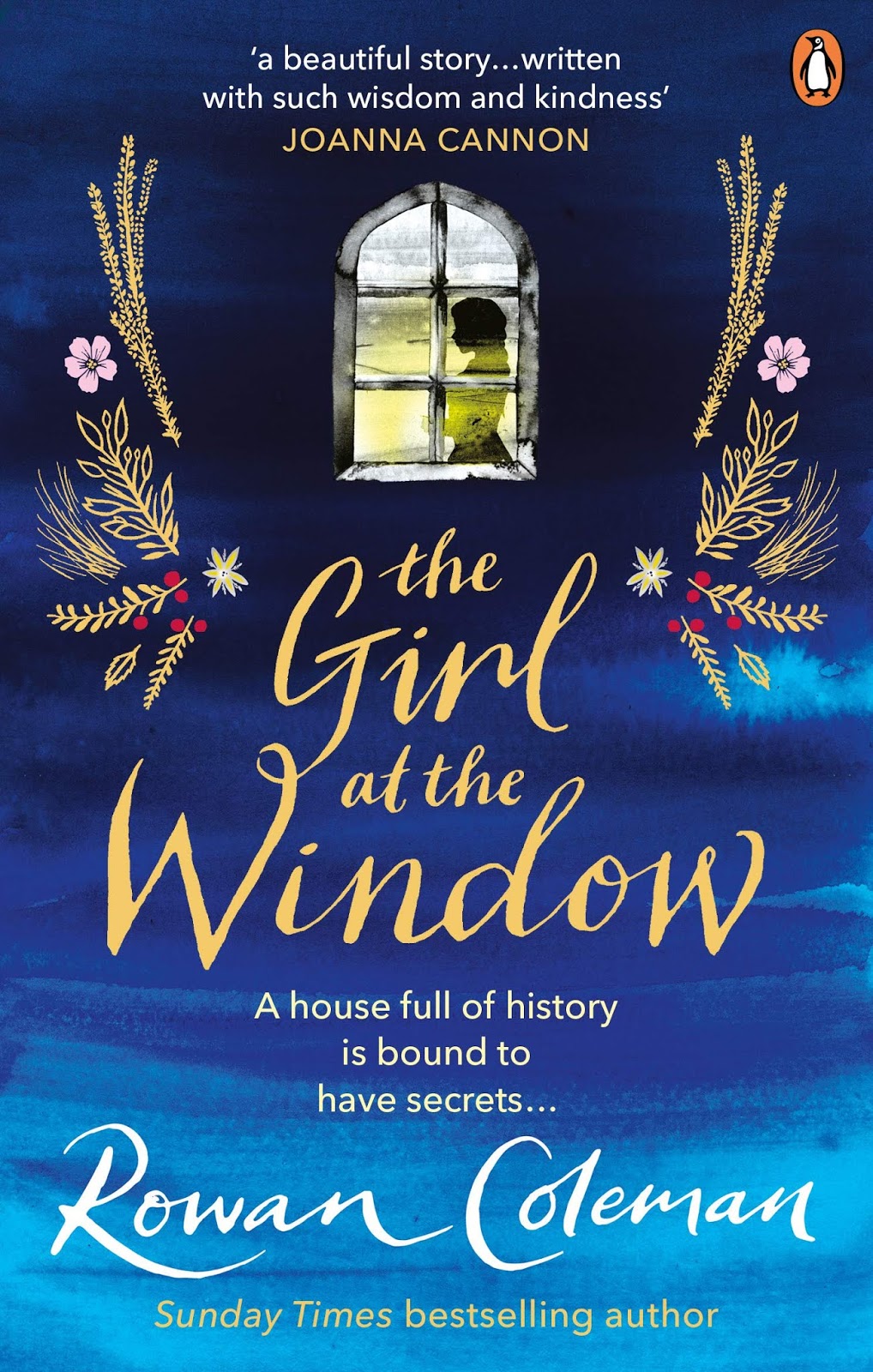
The Girl at the Window by Rowan Coleman


Wuthering Heights is one of my all time favourite books so I started this novel later than most people, because I wasn’t sure whether I would enjoy it. I can honestly say I did. The story of Cathy and Heathcliff is so much part of our popular culture that most people have heard a version of it. If nothing else people tend to know it’s set somewhere in Yorkshire and there are a pair of doomed lovers. When I read it as a teenager I thought it was the most romantic story I’d ever heard. I even argued for Cathy as a character over Jane Eyre in my A levels; I felt Cathy was more courageous than Jane who I thought ran away from her love for Rochester. When I reread the novels at university ten years later my thinking had changed radically. I could see that the love between Cathy and Heathcliff was more of an obsession, an unhealthy and toxic relationship that ultimately destroys them and almost the next generation. Heathcliff ceased to be a romantic hero and became instead, an abusive lover guilty of domestic violence, hanging dogs and possibly a murderer. Yet, I still love the novel especially the wild setting, the psychological development of the characters from childhood and the ghostly, gothic elements. This novel had all of those elements and a mystery at its heart too. 

Rowan Coleman weaves a multi-stranded story about Ponden Hall, a real place based near the Parsonage at Harworth. The hall is thought to be some of the inspiration behind Wuthering Heights, especially the box bed famous from one of the novels opening scenes where a child’s hand appears at the window to a terrified Mr Lockwood. Our heroine Trudy is an archivist and a huge fan of the Brontes and Emily in particular. Trudy and her son Will return to her childhood home of Ponden Hall after her husband Abe is tragically lost, presumed dead, in a plane crash in South America. Already struggling with grief, Trudy now has to live alongside her estranged mother who she hasn’t spoken to since she decided to marry Abe. Once there, she starts to see things she’d long forgotten. Ponden is full of apparitions and ghosts, such as the Gytrash ‘Greybeard’ who appears when a member of the Heaton family is going to die or the Ponden Child who appears tapping at the window just like Cathy, with tiny hands at the glass. Before long though, a new apparition starts to haunt Trudy, a young girl who can move furniture, change temperature in a room and is terribly angry. 

What follows is a tale across three timelines, full of love and loss, and not unlike Wuthering Heights in its cruelty and scope. Trudy finds a few pages written in Emily Bronte’s hand, hidden at Ponden back in the 19th Century, by her dear friend Robert Heaton. Inside is part of a new novel and diary entries from over 200 years earlier, when troublesome women were quickly branded as witches. A girl called Agnes tells of her love for another Heaton and their ‘marriage’ to each other at a stone called the marriage hole. But Agnes is not free, she is bought by local landowner Henry Cassons and no better than a servant. Could Agnes be the spirit Trudy sees and if she haunts Ponden how come Trudy feels her presence in the library where she working as an archivist for a local businessman? 

Coleman weaves the three timelines together very successfully and I truly enjoyed each woman’s story although it is Agnes and Trudy’s that are fleshed out, Emily is more of a conduit between the two. The novel plays on the age old question for fans and researchers alike; how did the Brontes write their books when they had so little experience of life outside a quiet country parsonage? The content of Emily’s book was criticised heavily by her contemporaries as having ‘unnatural passions’. In this novel, her awareness of Agnes’s terrible story is the explanation with Henry Cassons being a possible inspiration for the cruelty and obsession of Heathcliff. The book is researched well with the historical and autobiographical elements fitting well with the  central character of Trudy. Her relationship with her mother is an interesting element to the present day story. Just as Emily Bronte writes with great awareness of the psychology of characters and how abusive behaviour can be be passed through the generations, Coleman handles the mother-daughter relationship with care. Their relationship is the culmination of these other stories, almost as a lesson that the generational cycle can be broken. The only criticism I have of the ending is that it’s almost too tidy. It could have been a better novel if one or two of the current storylines were ended with a sad note or even left unresolved. However, it’s a minor point in a novel full of historical detail, great storytelling and mysterious paranormal events. Far from disappointing the Bronte lover, this book adds to the tradition and history of the sister’s beautifully. 

Tuesday, 24 September 2019

I Wanted You To Know by Laura Pearson


Dear Edie, I wanted you to know so many things. I wanted to tell you them in person, as you grew. But it wasn’t to be.

This wonderful book left me uplifted and sad all at the same time, The bittersweet story of Jessica, a young single mum who finds out she has cancer, is engaging and moving. The author delivers weighty subject matter with a real lightness of touch. At times I was reading with a lump in my throat, but I always looked forward to picking up Jess’s story and spending time in her world. As the novel opens, Jess and her baby daughter Edie, have recently moved back home with her Mum. We learn that Jess had left home for university, but circumstances have forced her back to her home town.  This main narrative, set in Jess’s present, is interspersed with letters written by Jess to her baby. Each letter starts with ‘ I wanted you to know’ and through them we learn about the life she had at university, her relationship with Jake, and the unexpected pregnancy that changes everything.

Just as Jess discovers she’s pregnant, Jake is offered a tour with his band. Determined that Jake will follow his dream, the couple separate, but Jess’s own father left when she was young and she doesn’t want the same for her daughter. Jake’s contact with Jess peters out and she comes to the conclusion he is not interested in the pregnancy or having a relationship with Edie. By the time Edie is born, the couple are no longer in regular contact and Jess has to face up to the fact she will be a single mother. Jess approaches her post-natal check up feeling daunted and then receives the news that changes everything. Jess has breast cancer. Now, a new beginning that should be joyous and filled with hope for the future, is overshadowed by weighty decisions, difficult conversations and the horrible fear that she may have to leave Edie facing life without her.

I had a real sense of the time Jess has left ebbing away like the sands of an hourglass. As treatment options fail, Jess has so much left undone. I had a real sense of Jess’s devastation that she won’t be able to be go through all the milestones that mothers and daughter enjoy together. In order to be sure she’s there for these moments Jess begins the letters that will let her daughter know where she comes from and how much her Mother loved her. This is vital because we soon realise Jess’s relationship with her own Mum is far from perfect. They go through some rough patches, but we never doubt that her Mum loves her and wants to help, even if she does make some terrible mistakes in the way she handles things. She does one of the worst things you can do to someone with a terminal or life-limiting illness; she takes her power away. I was worried whether Jess would be strong enough to take it back.

The way she copes with Jake also made me root for Laura to find her voice. She is so worried about ruining Jake’s tour that she doesn’t keep him informed. His contact with her simply dries up and although she is hurt and shouldering her fears about becoming a mum by herself, she doesn’t contact him. Then as the shock of the cancer diagnosis hits she is even more paralysed. If she does let him know, and he cuts his dream short,  will he always resent her and his daughter. She doesn’t even know how he feels any more, but knows she wouldn’t want him to return to her because of the cancer. Realistically though, she needs to let him meet his daughter. She wants them to have a relationship and this is especially important if she does not respond to treatment.

However, the most compelling relationship for me was the friendship between Jess and Gemma. This novel is a love letter to female friendship and I liked that this relationship felt the most ‘fleshed out’ in the whole novel. Right from the start Gemma was backing Jess up while juggling a job and babysitting Edie when she’s not working. Where the other relationships gave complications, Gemma seems to know what Jess needs before anyone else. She counteracts Jess’s mum’s tendency to judge and make decisions that don’t include her. Instead she is quietly there all the time, and has an ability to sink into the background when Jess needs time alone or with Edie. Most importantly she encourages Jess but doesn’t take her choices away. She makes it clear that Jess needs to speak to Jake, but stays out of their relationship. When Jess’s mum oversteps the mark, Gemma gives her friend encouragement to speak and permission to be angry. Their relationship shows that our friends are often more supportive than family. It teaches us that our female friendships are often the long term relationships in our lives and that the best friends sustain each other, even in the most difficult situations.

I like that the last words In the book are Jess’s own in the form of her final letter to her daughter. I did have a lump in my throat reading some parts of this and at different points I thought how authentic the voice was, especially in Jess’s letter. Often, when reading or watching fictional accounts of illness I become frustrated by inaccuracies or events that are totally impossible. This comes from the life experiences I bring when reading a book. When reading this I felt it was well researched or that someone had used their own experiences to tell Jess’s story. I wasn’t surprised to read that Laura Pearson had a similar diagnosis of breast cancer because her experience shone through. The bewilderment and fear of those closest to Jess felt true to my experience; I lost my husband to the complications of multiple sclerosis when he was only 42 and I was 35. 

I remember two strong and very contrary feelings. On one hand I was constantly busy and overwhelmed with the paraphernalia of caring for someone who’s dying. I was panicked that time was slipping away from us and I resented it being spent dealing with feeding tubes, chest physiotherapy and the constant fear of infection. While other days I would feel paralysed in a bubble, living a weird parallel life where the same routine was replayed over and over, watching everyone else getting on with the real business of life. We became a small, committed unit with only one focus and as I read the novel I could see Jess’s loved ones doing the same. They drop out of normal, every day, life to focus on their loved one and as I was reading I was aware of the devastation they would feel if they lost Jess anyway. When the person you love becomes terminally ill, and you become their carer, the sense of loss after their death seems compounded by suddenly having no purpose. I went from caring for my husband 70+ hours a week to waking up with nothing to do all day. It complicates the grief. The loss becomes multiple; the person you love, role as spouse, job and purpose, structure and status. The final chapters of the novel brought this back to me. 

I was also heavily invested in Jess’s emotions, coping with the emotions of becoming a young, single Mum and then finding out that this new life may be cut brutally short. Jess barely has time to enjoy Edie, before she has to worry about leaving her. She has come to terms with her choice to postpone university and encourage Jake to follow his dream because she assumes, like we all do, that she has all the time in the world. She might not have time to pick up these parts of her life and she may not have time to settle into being a Mum. Questions constantly flash through her mind. If Jake returns, does he love her or is he only there because she’s so ill? How will he cope becoming a single Dad and who might he form relationships with in the future? Most heartbreaking of all; what if Edie doesn’t remember her? This is what prompts her to start writing. She wants to write down everything she thought or felt about her new baby and also pass on those bits of motherly wisdom that would be otherwise lost. Even if Edie does lose her Mum, she will have a constant sense of her through those letters and the pieces of advice she gives. Most importantly, she will know that at this crucial moment of her Mum’s life, she was so glad of her decision to have Edie and that Edie’s loss is uppermost in her mind. 

I read this book with a lump in my throat and a lot of memories in my heart. The reader always brings something to the book and in this case, my reading experience was more poignant because of my own loss and possibly because of the limitations due to my own long term health problems. I think the author has been so clever to write about a life-changing experience, but never let it become too heavy to read. Despite the heartbreak, there are moments of every day humour and I felt genuinely uplifted by the depiction of female friendship. In difficult times I have found that even where I’ve had a committed partner, it is my female friends who are always constant and hold me up when I can’t do it for myself. Jess and Gemma embody this and I found myself hoping that the author had a Gemma during her own illness. Mostly, I am very grateful that Laura Pearson had the bravery to write about something so close to her own experience, and to write about it with humour, honesty and raw emotion. 

Saturday, 21 September 2019

The Benefit of Hindsight by Susan Hill

I love this series and always pop straight out to buy the new instalment. In this novel the crime being investigated is a burglary. A couple enjoying a quiet evening in their remote cottage are disturbed by a couple who are stranded after their car has broken down. While one of the couple shows the man to the phone, his husband strikes up a conversation with the girl. They have a cup of tea and talk about the artwork hanging around the house. The next week they receive a letter of thanks plus two tickets to see the ENO perform. Unfortunately, on their return they find their cottage burgled and their precious art collection gone. 

The detective solving this crime is Simon Serrailler and he makes a big decision early on by ordering a news blackout. His reasoning is that if all goes quiet the perpetrators will think they’ve got away with it and plan another burgla
ry. His plan backfires when local businessman and donor to the police, Declan McDermid and his wife return early from a charity reception to find their house being broken into. The target is their art collection, including priceless Warhol prints, but come the morning local doctor Cat Deerborn pops in for a coffee to find the couple tied up, beaten and bleeding. When his wife dies of her injuries will Serrailler’s decision be called into question? 

Simon Serrailler is intriguing as a central character. He doesn’t give anything away. I’m never sure what his thinking or motivation is. In the past I have shared his love interest’s frustrations as he doesn’t seem to need them at all. Even after this many novels I don’t fully know what to make of him. I suppose he fulfils the ‘flawed detective’ - wedded to work, unable to maintain a relationship, handsome and thoroughly inaccessible. Here Serrailler is given more emotional depth. He is now a wounded hero, struggling to accept a life-changing injury he received in the line of duty. The calm, cool surface he has always tried to maintain has always covered glimpses of anger and in this novel we finally see that surface crack. It seems he is only able to find peace of mind when drawing and as he starts to suffer chest pains, breathlessness and feelings of doom it becomes clear that a lifetime of bottling up his emotions will have consequences. I welcomed this aspect to his character, because it made him more accessible and human. 

 In the past I have always been drawn to his sister Cat and her family. They are the warm centre of these novels and her struggle to be the woman of the family, serve her patients and be Mum to her own kids. I was especially touched by her struggle nursing her terminally ill husband until his death earlier in the series. Here we find Cat struggling to reconcile various different parts of her life. She is one of the ‘middle’ people in society; coping with parents in declining health while still having children at home. Cat and Simon’s father is as judgemental as always, and continues to treat women as objects. Cat is torn between daughterly duty and the responsibility she feels for his wrongdoing. At work she is torn between principle and having a life outside her patients. Now working for a private GP company she is called upon by NHS colleagues and her own conscience to justify working in the private sector. Finally she is worried about Simon, but torn by loyalty to her new husband who happens to be the Chief Constable and Simon’s boss. 

It is one of Cat’s patients that caught my imagination and is one of the most intriguing parts of the novel. Carrie Pegwell is pregnant when Cat is first called out to see her part way into the novel, but Cat can’t detect any joy or expectancy. In fact she finds Carrie listless and depressed, while her husband is largely detached from the pregnancy and his wife. Carrie has become obsessed with the idea something is wrong with her baby yet hasn’t been for any of the recommended tests or scan. Cat is the first doctor she has seen, but even with reassurances Carrie will not accept her baby is healthy and her pregnancy normal. Cat suspects a fixation borne of anxiety, but can’t discount the fact that mums often have a sixth sense when it comes to their children. I found myself reading ‘just one more chapter’ to see what happened when the baby was born and where this strange couple fit into the larger story. 


I found the novel gripping enough to keep turning the pages and read it in a day (and one very late night). I enjoyed the progression of the characters lives, especially changes within the family dynamic as Cat’s children grow into adults. Towards the ending I did have that experience, peculiar to kindle books, where I raced on and on then hit the ending suddenly as if I’d come round a corner and hit a tree. It felt very abrupt and as if things were unfinished; Some characters were in limbo and the crimes went unpunished. I had to go back and read the last few chapters again to make sure I hadn’t missed anything. This could be a cliffhanger for the next novel, but could also be a comment on a life where not every ending is neatly tied up in a bow. 

Wednesday, 18 September 2019

Trapeze by Leigh Ansell

I dabble into YA fiction from time to time because I like to try it for my teenage stepdaughters. I have found some real gems that I really enjoyed and with its background in the circus I was sure this would be one I would enjoy.

Corey is a teenager sigh a slightly unusual life in the circus Mystique. Estranged from her birth mother, Corey has been brought up her Aunt Shelby and trained as a trapeze artist. Now 17, Corey dreams of becoming the lead artist on trapeze and a lifelong career with the company. However, one fateful night in a town called Sherwood a terrible fire changes Corey’s future completely. Mystique are ruined and Aunt Shelby can’t give her a home anymore. The police are suspicious about the cause of  the fire and so many performers are injured there is no way forward. Corey is forced to reunite with her estranged mother who happens to live in Sherwood. Now she is like every other teenager, going to school every day and living in the suburbs. How will Corey adjust to this new way of living and will she ever build a relationship with her birth mother?

Family is a major part of the novel and I enjoyed the way the author subverted the usual ideas around the best way to bring up children. Hazel, Corey’s mother, could not offer her the stable family she needed. Everything we think is wrong for children has been Corey’s norm: the travelling lifestyle, minimal schooling, living in a caravan and performing every night. The instability of the circus has been her constant so any disruption of that, even for a more ‘normal’ environment, is going to have an impact. The author illustrates this best when Corey first goes to Hazel’s house. In contrast to the colourful, cramped surroundings of the circus, Corey’s new home feels vast, cold and sterile. Her bedroom is very white with nothing out of place. Corey yearns for the cramped trailer, her glittery costumes and the sound of other voices. Hazel and Aunt Shelby may be sisters but their characters seem to match their decor; Aunt Shelby is warm and welcoming whereas Hazel feels quite austere at first.

School is another hurdle and contrasts sharply with the bits of schooling she’s had previously. Corey feels out of her depth, emotionally and intellectually. The new classmates she meets are friendly but she also faces discrimination and scrutiny. The fire is front page news and Corey is horrified to hear how some classmates talk about her circus friends, accusing them of vandalising a new housing estate  and speculating on who started the fire. However, she does befriend Luke, and they form a relationship that gives Corey more stability in this new world. While she is struggling to bring her school work up to standard and improve her relationship with her Mum, Luke feels like a constant. The book does focus in on their romance and how it impacts on their respective families. While reading I wondered whether Corey would become so involved with Luke and Sherwood that the circus and her talent as a performer we would be lost.

I was glad to see that the author chose not to go for the saccharin happy ending, not everything is tied up neatly. I think it’s important for YA fiction that endings are more realistic and not hearts and flowers. I imagine the original format of the novel made it difficult to come to a conclusion - the book was serialised on WattPad before publication and readers would have been heavily invested in certain characters and subplots so pleasing everyone would be difficult. I think Corey is such a sympathetic character that it’s hard not to root for her and I was wishing for an ending where she can get back to her true love, the circus. The lesson that not everyone is cut out for a conventional lifestyle was something teenagers need to hear. It’s ok to follow a different path and do what you love.

I received a proof copy of the novel via NetGalley in exchange for an honest review.


Tuesday, 17 September 2019

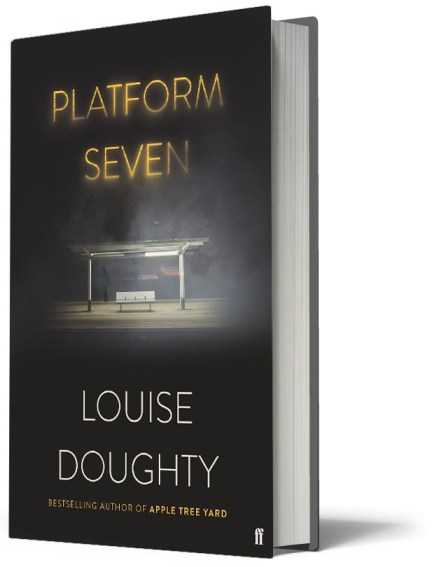
Platform Seven by Louise Doughty

Platform Seven

Having spent a bit of time hanging round Peterborough train station over the years, I thought it seemed an unpromising place to set a novel, but Louise Doughty has proved me wrong. In Platform Seven, she weaves an unmissable whodunnit where Lisa tries to understand why she died.

The book opens following security guard Dalmar, a refugee from Somalia, as he carries out his night shift. After midnight the station goes quiet and most people might assume it is closed, but it runs with a skeleton staff and between the hours of 3am and 6am only freight trains rumble through at platform seven. This is the last platform, towards the back of the station and only partially viewable by CCTV. It is the perfect place for homeless people to hide out and try to sneak into the warmth of the waiting room for a few hours. Dalmar has been desperate, so sometimes he doesn’t have the heart to move them on, feigning ignorance so they can grab s few moments of warmth. At first, he mistakes the man walking through the station, for a homeless person and pays no attention. The man, wearing a cap and donkey jacket makes for platform seven and waits. To Dalmar he seemed hunched in the cold and seems to almost be in a trance. 

There is only one other witness to his arrival and that is Lisa. Lisa is trapped in the station, she knows all the staff by name but can’t get them to see and here her. On this occasion she is sure she understands the desperation in this mans eyes and she worries he isn’t here for the warmth. As a freight train trundles towards the station he steps towards the platform edge and Lisa desperately tries to stop him but he can’t hear her. Dalmar finally sees the man but is too far away to make a difference. He shouts, But the man keeps going. He steps through Lisa and straight under the train.

Doughty explores the effect this man’s suicide has, firstly on the railway staff. PC Ashcroft from the British Transport Police, and his boss face the task together. Ashcroft has never experienced a death here before and the horrifying detail of gathering body parts, sorting through clothing to look for ID and organising a cleaning team affects him and us at the same time. He doesn’t want to break down but struggles and wants to understand what could make a man die like this? Dalmar, who witnesses the incident with Lisa, suffers a flashback triggered by the event. We are transported back to a dinghy on a river and a woman’s head seemingly floating and screaming at the same time. Lisa wanted to stop him, is horrified by what she’s seen and the realisation that this is how died too. In the days that follow Lisa becomes fascinated with a distraught young man she sees in the cafe while Ashcroft discovers that a young woman died recently on the same platform. Something about Lisa’s death piques his interest and makes him wonder whether the events leading up to her apparent suicide are properly investigated. He asks if he can do some digging and gets the go ahead. Lisa also has a breakthrough, she finds that she can follow the young man out of the station and accompanies him on his walk home. This begins her wanderings and the unlocking of her story.

Doughty’s description of the romance between Lisa and her doctor boyfriend, Matty, is brilliantly written and shows a real understanding of domestic abuse. Psychological or emotional abuse has only been made a criminal offence more recently, but it is subtle and difficult to pinpoint even for the victim. I was in an emotionally abusive relationship for five years and despite having therapy there are still times when I am confused about how and why I let this happen. Of course I’m not responsible for the abuse, but I was responsible for allowing it to continue. We see how slow and subtle the behaviour begins; a throwaway comment that could be a criticism, a moment of jealousy, an insistence that a hurtful comment was simply a joke and you’re too sensitive. I highlighted a whole passage to use with writing therapy clients:

The sad, sobering and undramatic truth is, I made the same mistake that women and girls throughout the ages and across continents have so often made, the one that is so easy and seductive, so flattering to ourselves. I mistook possessiveness for love. By the time I realised the magnitude of that mistake, I had too much invested in it to unpack it, and so I had to keep on making it in order to justify the fact that I had made it in the first place. It was too large and complex an error to admit–and how could I explain I had made a mistake to family and friends when I didn’t even understand how I had made it myself?

This is a beautiful piece of writing that answers perfectly the question everyone asks; ‘why didn’t you leave?’ When asked by my family why I’d never told them, the answer was the same. My husband had died, I had been broken and this person professed to love me. I was ready for something positive to happen in my life. I glossed over a couple of red flags because he was stressed at work, or moving house and as well as an excuse there were promises to change. If I admitted that my relationship was a sham I would have to admit there was no happy ending and I would be back where I started: bereaved, broken and alone.

It took me five years to admit to others and myself that I had to leave. I’d had to gather my strength over time and eventually he behaved so badly I couldn’t gloss over it any more. I was aware reading Lisa’s story that things could have been so much worse. Matty breaks her confidence and gaslights her until she doesn’t even trust her own judgement anymore. The outcome is devastating.

I really enjoyed the way Doughty slowly frees Lisa. Firstly, she is liberated from the station, then finds a way to whisper a suggestion, she travels all over Peterborough and even beyond the city towards the end. She finds others like her: the old man from the station suicide pops up soon after his death; a woman in an orange suit striding towards the station; the weird grey blob at the top of the multi-storey car park who she knows to stay away from. However, there are places she wants to be. Most importantly, a visit to the woman she once saw through a window who seemed to need help. 

Doughty’s book is a great thriller and all those cliches we all know so well like ‘a real page turner’ and ‘I couldn’t put it down’ were all true. But the book was more than that. Lisa’s story absolved me in a way. It made me understand my own experience like nothing else has. It taught me to talk, just as Lisa wishes she’d acknowledged the woman at the window or talked to someone about what was happening. I found PC Ashcroft’s conversation with the downstairs neighbour so moving. Her language barrier and Lisa’s reticence to let anyone in meant that her warning ‘you don’t have to put up’ was barely noticed. Yet her warning came from her own experience of fear, control and violence. We need to talk more. To not be ashamed of our experience. After all, I didn’t ask to be a victim of psychological abuse and nor did the women in the book. We can use our experience to educate, warn and let others know that this is not their fault. Lisa has to find peace in a different way, but this book serves as a warning, so women suffering abuse know they can access help and there is a better, more peaceful life out there.